
8 hr
Armenia's Sacred Sites & Natural Wonders
Discover ancient monasteries, a pagan temple, and geological marvels on this full-day journey from Yerevan
Reserve
Hand-picked by our editors — only the best 5 experiences from 14 reviewed.
Verified partners for every tour, free cancellation where available, and instant confirmation on every booking.
8 hr
Discover ancient monasteries, a pagan temple, and geological marvels on this full-day journey from Yerevan
Reserve
8 hr 30 min
Explore a pagan temple, rock-carved monastery, and volcanic basalt formations with traditional bread-making
Reserve
9 hr
Journey through Armenia's spiritual roots, ancient winemaking history, and dramatic monastery landscapes
ReservePrices from verified partners. Availability updates in real time at checkout. Free cancellation policies apply where shown.
The landmarks, rooms, and views travelers on this tour remember — all visible on a single visit.
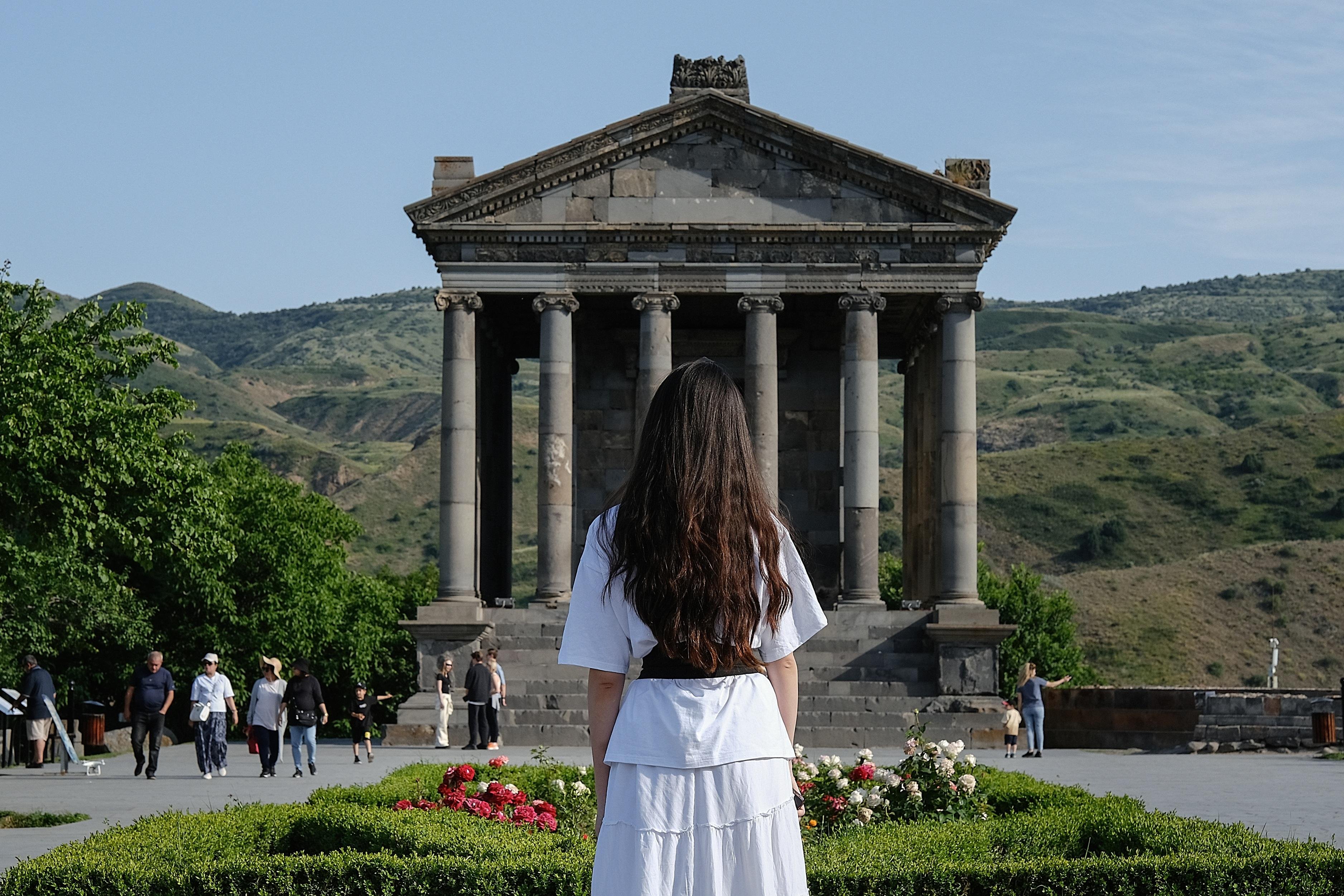
This 1st-century Hellenistic temple is the only standing Greco-Roman colonnaded building in Armenia. It features 24 ionic columns that define its classical structure.
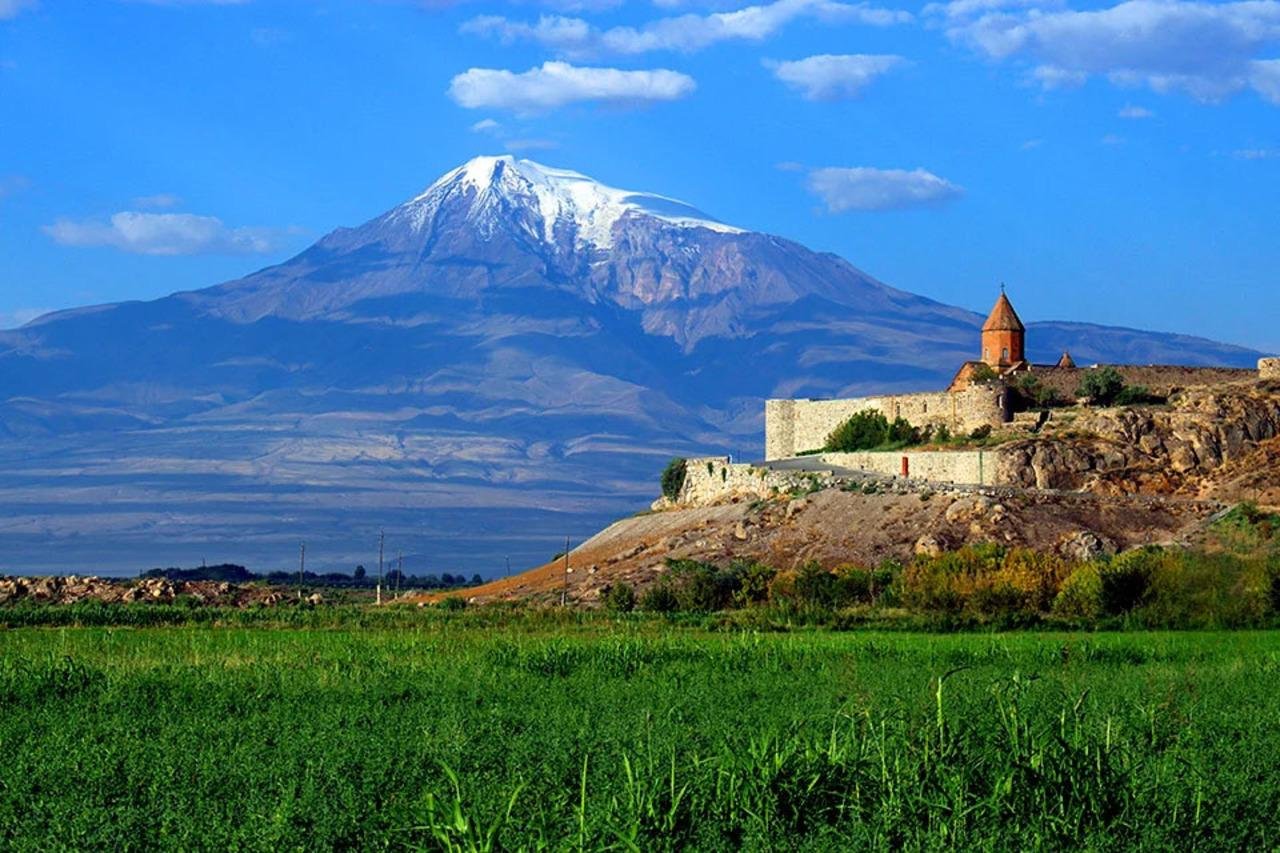
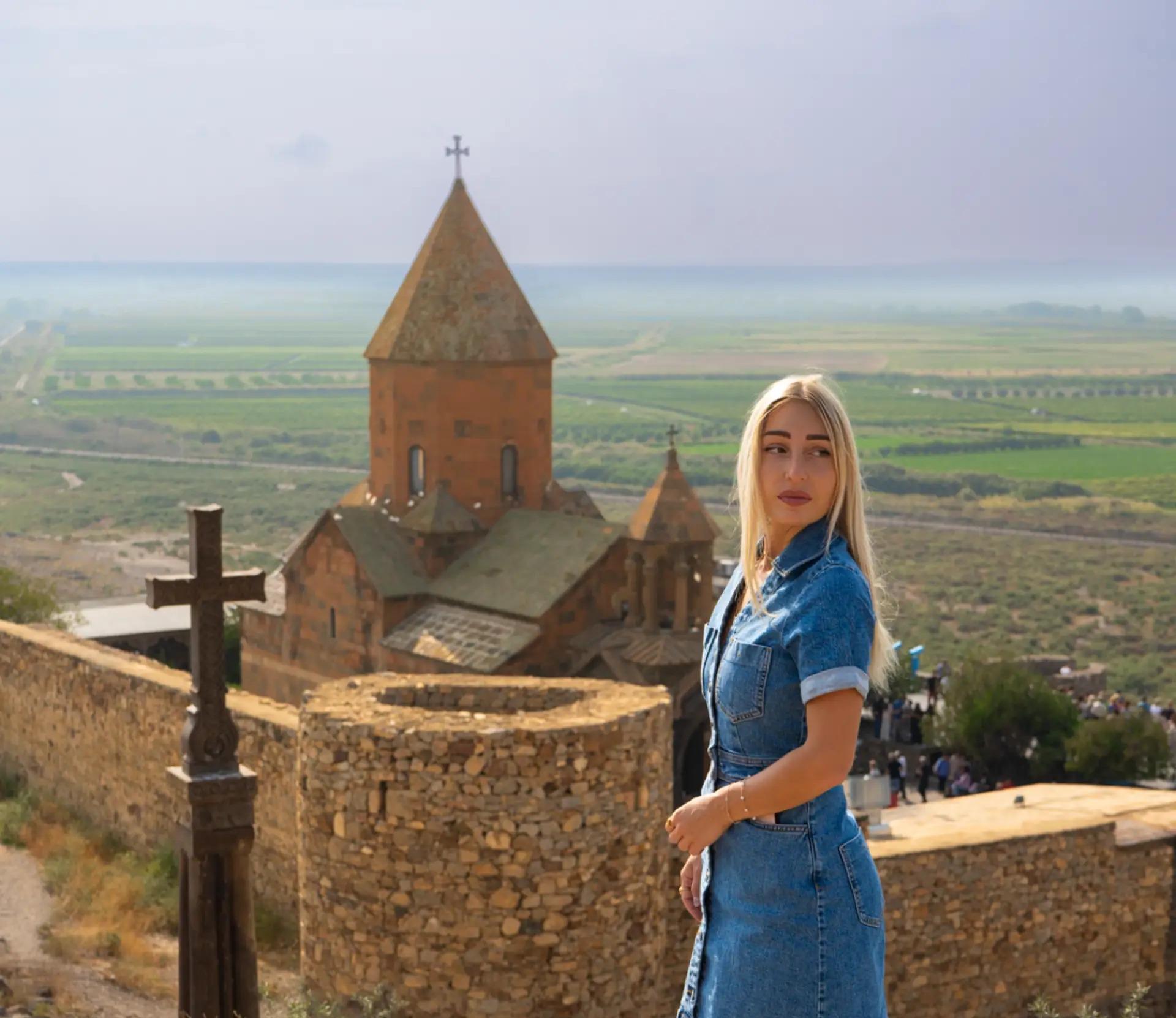
Located near the border, this monastery is known for its stunning views of Mount Ararat. It is the site where Saint Gregory the Illuminator was imprisoned for 13 years.
This medieval monastery is partially carved into the adjacent mountain. It is a UNESCO World Heritage site known for its complex acoustics.
Situated near the temple, this site contains well-preserved mosaic floors from the 3rd century. It showcases the high level of Roman influence in the region.
They offer distinct architectural experiences; most visitors who prioritize a comprehensive khor virap garni geghard tour tour choose Garni for its complete structure and Zvartnots for its significant archaeological ruins.
| Feature | Top pick Garni Temple | Zvartnots Cathedral |
|---|---|---|
Architectural style |
Hellenistic-Roman colonnade | Early medieval circular ruins |
Historical period |
1st century AD | 7th century AD |
Landscape setting |
Azat River gorge overlook | Ararat Plain plateau |
Accessibility |
9 steps to reach plateau | Flat ground with paved paths |
Time required |
1–2 hours | 45–60 minutes |
Cultural significance |
Pre-Christian pagan heritage | UNESCO-listed early Christian architecture |
| See tickets → |
Verdict: Select Garni Temple if you seek a preserved landmark for your khor virap garni geghard tour tours, or opt for Zvartnots if you prefer ruins accessible via khor virap garni geghard tour tickets.
Choose your ticket, select your date, and reserve in under two minutes. Secure checkout handled by our verified partner.
Instant confirmation by email, with a mobile voucher you can save offline. No printing, no queuing at a collection desk.
Arrive at the entrance, show your voucher on your phone, and walk in. Most tickets include priority or skip-the-line access.
Practical details for your visit straight from our verified partners — hours, access, rules, and how to get there.
Yerevan, Armenia
Standard departure point for most operators.
Follow the H3 highway east from Yerevan for about 30km.
Reliable app-based services offer direct transport to Garni.
Modest clothing is recommended when visiting the nearby religious sites included in your khor virap garni geghard tour. Comfortable walking shoes are essential for navigating the 9 steps at the Garni Temple entrance.
Small daypacks are permitted during your khor virap garni geghard tour. Security checks may occur at the entrance of the Garni Temple complex.
Photography is permitted for personal use at Garni Temple. Professional filming equipment requires prior authorization from the administration office.
The main area of Garni Temple is accessible, though the path involves 9 steps. Guests should be prepared for uneven ground near the gorge edge.
Mobile phones are permitted throughout the site. Please use headphones if playing audio guides during your khor virap garni geghard tour.
The khor virap garni geghard tour is suitable for families, though parental supervision is required near the canyon walls. Strollers may be difficult to maneuver on some gravel paths.
Picnics are not permitted inside the Garni Temple grounds. Several local cafes are located just outside the entrance for those on a khor virap garni geghard tour.
Pets are not allowed within the fenced archaeological site. Service animals are permitted with documentation.
The khor virap garni geghard tour provides a comprehensive look at Armenian heritage. Ensure your devices are charged for the day-long journey.
Best time to go, insider tips, nearby landmarks, and the cancellation fine print — flip through to skim what matters to you.
How crowds, weather, and events shift across the year.
Mild temperatures and blooming landscapes make this an ideal time for a khor virap garni geghard tour.
Expect hot weather; the 09:00 arrival window is critical for a pleasant khor virap garni geghard tour.
Cooler air and clear views of Mount Ararat provide excellent conditions for a khor virap garni geghard tour.
Sites are less crowded, though temperatures at the gorge can drop significantly.
Small details that turn a good visit into a great one.
Arrive between 09:00 and 10:30 to enjoy the site before large groups arrive.
Carry sufficient water as the Garni Temple area offers little shade.
Wear sturdy walking shoes to navigate the 9 steps and rocky terrain.
Download offline maps before departing Yerevan for your khor virap garni geghard tour.
Apply sunscreen, as there is limited shade near the Roman-era structure.
Non-bookable sights within a short walk — free to visit, easy to pair.
A dramatic basalt formation located just below the temple.
A historic settlement surrounding the ancient site.
Flexible, no hidden fees.
Full refunds are available for cancellations made within the specified operator window. The 1,500 AMD conservation fee is included in pre-paid tour packages.
Hand-picked options within walking distance — pick a district for vibe, or a specific hotel for convenience.
Wide range of options in the capital city.
Family-run guesthouses near the temple site.
Garni Temple stands as the sole surviving Greco-Roman colonnaded temple in the former Soviet Union, its twenty-four Ionic columns rebuilt in the 1970s from rubble left by a 1679 earthquake. Commissioned in the first century CE by King Tiridates I and dedicated to Mihr, the Zoroastrian sun deity, the structure occupies a triangular headland above the Azat River gorge in Kotayk Province, sixty kilometers east of Yerevan. The basalt podium and the symmetry of the peristyle echo Hellenistic temple design, yet the dedication to a pre-Christian Armenian pantheon marks the temple as a hybrid monument — one foot in the Mediterranean architectural canon, the other in the ritual landscape of ancient Armenia. Khor Virap Garni Geghard tour itineraries pair the pagan temple with two Christian monasteries: Khor Virap, where Gregory the Illuminator was imprisoned for thirteen years before converting King Tiridates III in 301 CE, and Geghard, a fourth-century foundation carved partly into the cliffs of the upper Azat gorge. The tours run as full-day circuits from Yerevan, typically departing between eight and nine in the morning and returning by early evening. Most include a stop at Khor Virap first, where the snow-crowned cone of Mount Ararat dominates the southern horizon across the Turkish border, then proceed to Garni for midday light on the colonnade, and finish at Geghard, where the acoustics inside the rock-cut chapel draw pilgrims and choral groups alike. Some itineraries add a lavash-baking demonstration in Garni village or a wine-tasting detour to the Areni-1 cave complex in Vayots Dzor, extending the route southward. Garni itself reopened to the public in 1975 after a decade-long anastylosis project led by architect Alexander Sahinian, who used original fragments recovered from the gorge and replicated missing elements in matching basalt. The temple measures 17.5 by 11.7 meters on plan, with steps ascending the eastern facade toward the cella. A ruined Roman bathhouse with a geometric mosaic floor lies ninety meters southwest of the temple, and the remains of a medieval chapel and a fourteenth-century fortification wall trace the edges of the plateau. The site operates daily from nine in the morning until half past nine in the evening; a conservation fee of 1,500 Armenian dram applies to foreign visitors. The access path from the car park involves nine steps. The Khor Virap Garni Geghard tour format appeals to visitors seeking a compressed introduction to Armenia's layered religious history — pagan, early Christian, medieval monastic — within a single day's driving radius of the capital. The three sites occupy distinct topographic settings: Khor Virap on the Ararat plain, Garni on a gorge promontory, Geghard within a narrow canyon. Collectively, they anchor the narrative arc that Armenian heritage marketing frames as the journey from Hellenistic periphery to Apostolic heartland, a trajectory encoded in stone across seventeen centuries.
"The twenty-four Ionic columns rebuilt from rubble left by a 1679 earthquake stand as the sole surviving Greco-Roman colonnaded temple in the former Soviet Union."
A step-by-step walkthrough of the visit — what you'll see, how long each stage takes, and the details that matter.
You leave Yerevan by eight-thirty, the coach crossing the Hrazdan River valley as the Gegham Range sharpens to the east. Khor Virap arrives first: you descend a narrow ladder into the pit where Gregory the Illuminator spent thirteen years in darkness, then climb back to ground level and walk the outer courtyard as Mount Ararat fills the frame to the south, its twin peaks suspended above the plain. An hour later the road bends into Kotayk Province and climbs toward Garni village. You step from the coach onto the triangular plateau and the colonnade appears — twenty-four basalt columns, honey-lit by midday sun, the Azat gorge dropping six hundred meters beyond the pediment. You walk the stylobate, counting the Ionic capitals, then follow the guide to the mosaic floor of the Roman bathhouse, its tesserae forming interlocking Greek meanders. If the tour includes the lavash demonstration, you pause in a village courtyard to watch dough slapped onto the inner wall of a sunken tonir oven, the flatbread peeling away in blistered sheets. The final leg threads the upper Azat canyon to Geghard, where you enter the rock-hewn chapel and the guide invites silence: a single voice reverberates for four seconds, the carved stone amplifying every syllable. You return to Yerevan by dusk, the Ararat silhouette receding in the rear window.
Garni Temple is open daily from 09:00–21:30. This ensures plenty of time for those on a khor virap garni geghard tour.
The conservation fee is 1,500 AMD per person for foreign visitors. This is often included in the price of your khor virap garni geghard tour tickets.
The best arrival window is 09:00–10:30 to avoid midday crowds and peak heat. This is recommended for all guests taking a khor virap garni geghard tour.
Accessing the main area involves 9 steps. Please take care when navigating these during your khor virap garni geghard tour.
Yes, our extended khor virap garni geghard tour includes the famous Khor Virap monastery overlooking Mount Ararat.
Yes, the khor virap garni geghard tour is family-friendly, though children should be supervised near the canyon edges.
The 1,500 AMD fee is paid at the entrance of the Garni Temple complex. Check if your khor virap garni geghard tour includes this cost.
Wear modest clothing for religious sites and comfortable walking shoes for the 9 steps at the temple. This is standard advice for any khor virap garni geghard tour.
Yes, photography for personal use is allowed. Capture the beauty of your khor virap garni geghard tour as you explore.
Public transport to Garni is available, but a guided khor virap garni geghard tour provides the most convenient access to multiple sites.